
Layered Case (THICC)
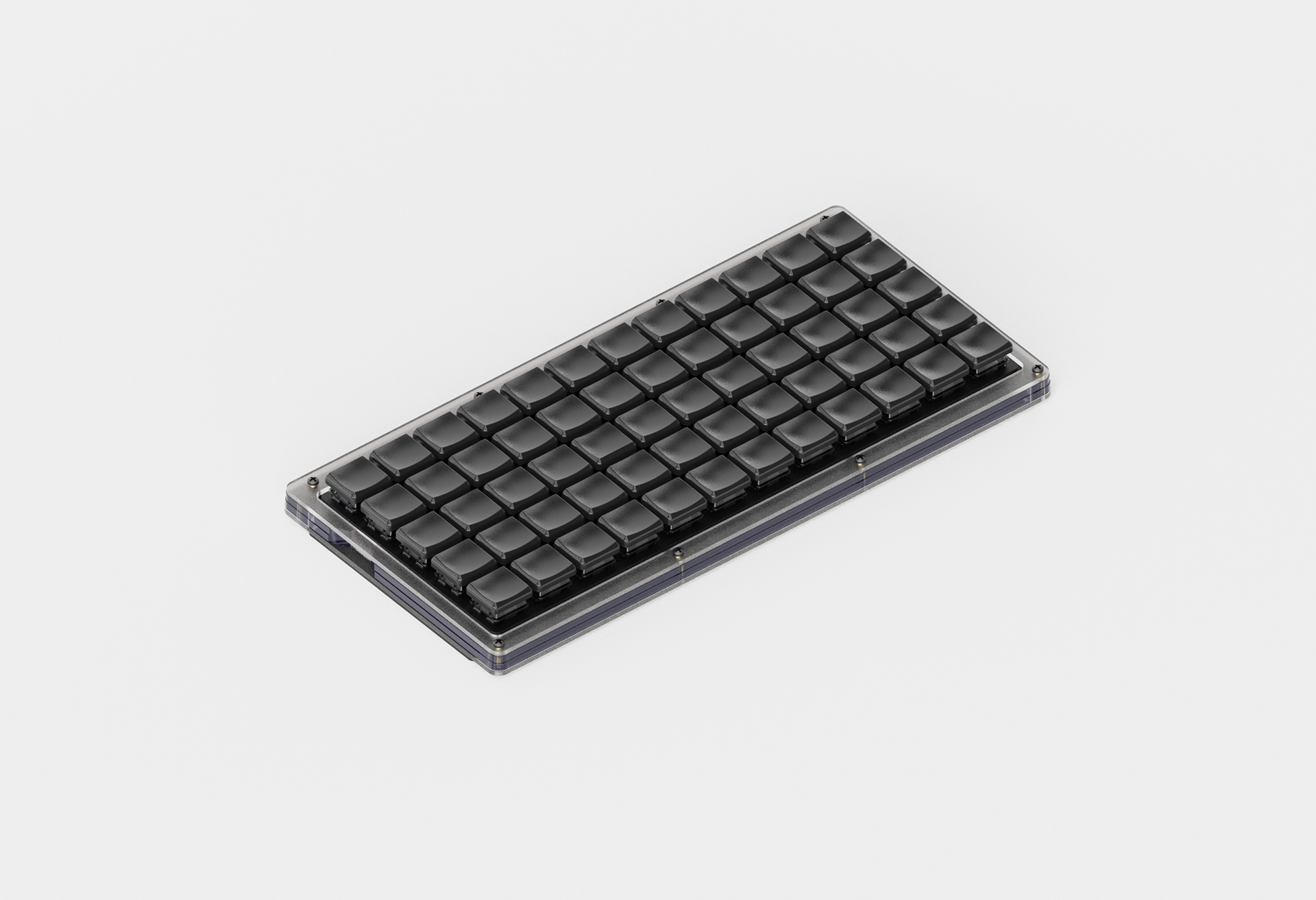
A simple case designed for 5x12 ortho (LP) by boardsource
Ever since discovering Jack Humbert’s ortholinear keyboard concept (OLKB), I’ve wanted a slim, wireless version that fits perfectly into a travel setup with my Surface Go.
2022
Side Project
Role: ID, CAD, CMF, Graphics Rendering, Prototyping
Software: Onshape, Keyshot, illustrator
Production (y/n): n
an easy, affordable and repairable compact solution you can carry.
Background
The go-to choice at the time —Drop's Preonic and Planck —unfortunately lacked Bluetooth support and Choc v2 compatibility.
(I ended up pairing it with some impractical SA profile keycaps, but the aesthetic was worth it.)
Thanks to the arrival of ZMK and Nice!Nano MCU, I managed to track down a similarly configured 5x12 Ortho (LP) from Boardsource (now discontinued).
With no compatible cases available on the market due to the demands (or lack thereof), I decided take matters into my own hands and design a case.

Why Acrylic?
While FDM printing is deemed the standard among keyboard enthusiasts, I have steered away from using it; the process is often more costly, the surface texture lacks smoothness, and, most importantly, it is unable to capture the soft, diffused 'cloudiness' of a pre-textured acrylic sheet.
Furthermore, the keyboard's low-profile geometry, combined with an established rapport with the supplier, makes this an ideal application.
Material-specific design
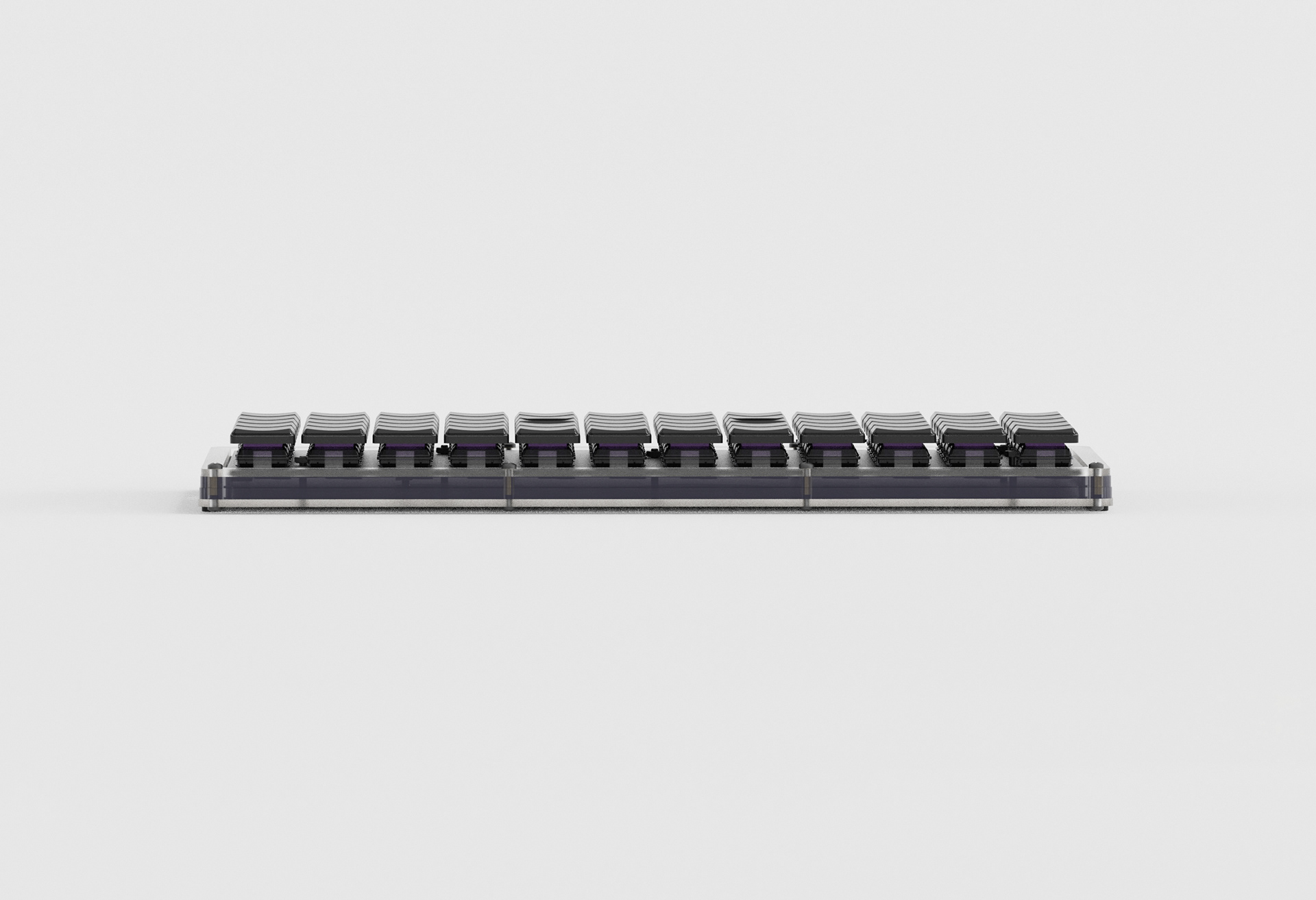
The design consists of simple stack of 4 laser-cut acrylic sheets, sandwiches 2 customisable accent layers between scratch-resistant, matte opaque top and bottom plates.
(A thin variant was also designed which strips to the bare minimum of only 1 bottom layer and 1 middle layer to mount excessive components)
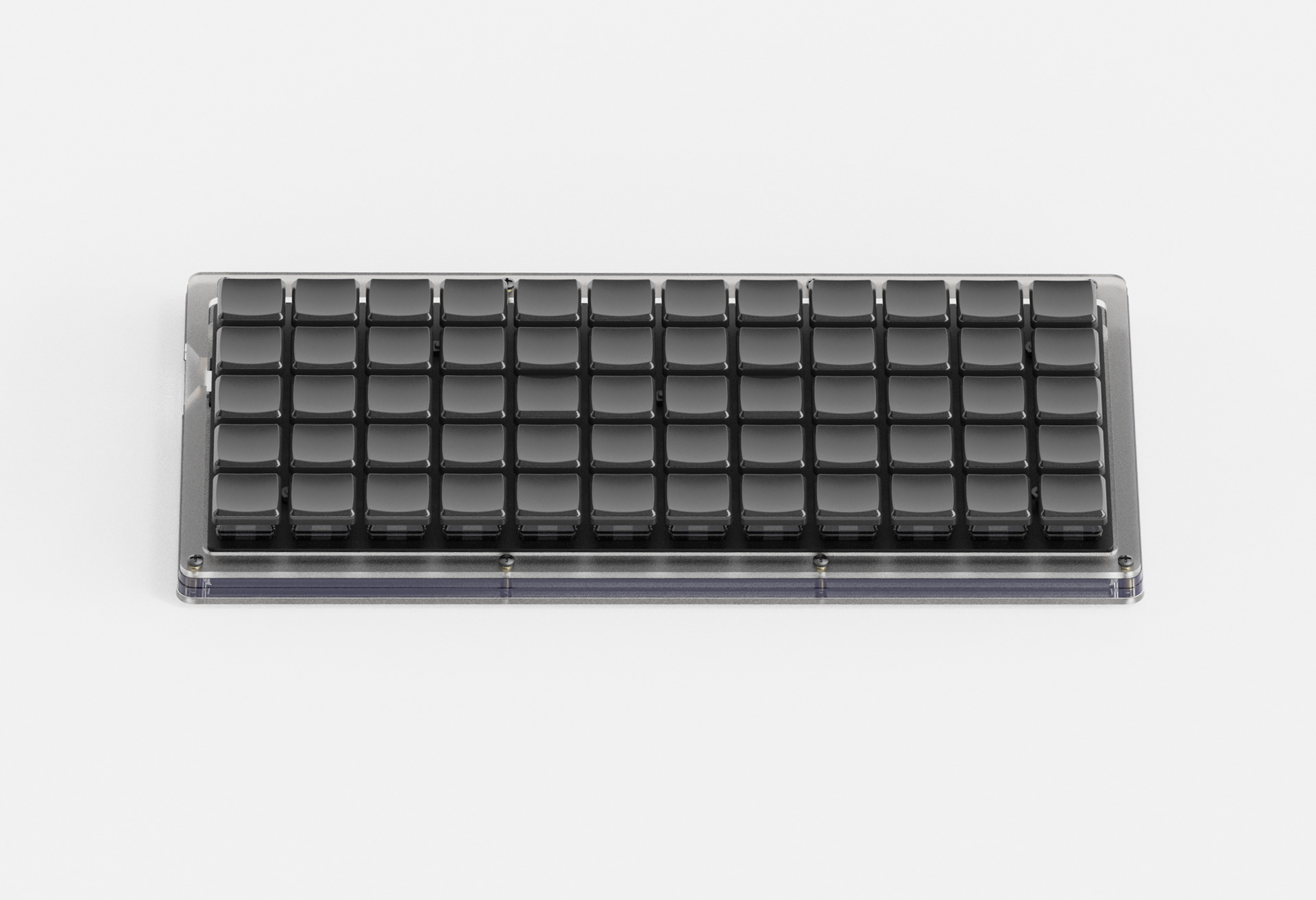
By using a deliberate stepped design, I was able to accommodate the variance and inconsistency in laser-cut edges which also showcases the raw characteristics of the process, material while maintaining visual balance.
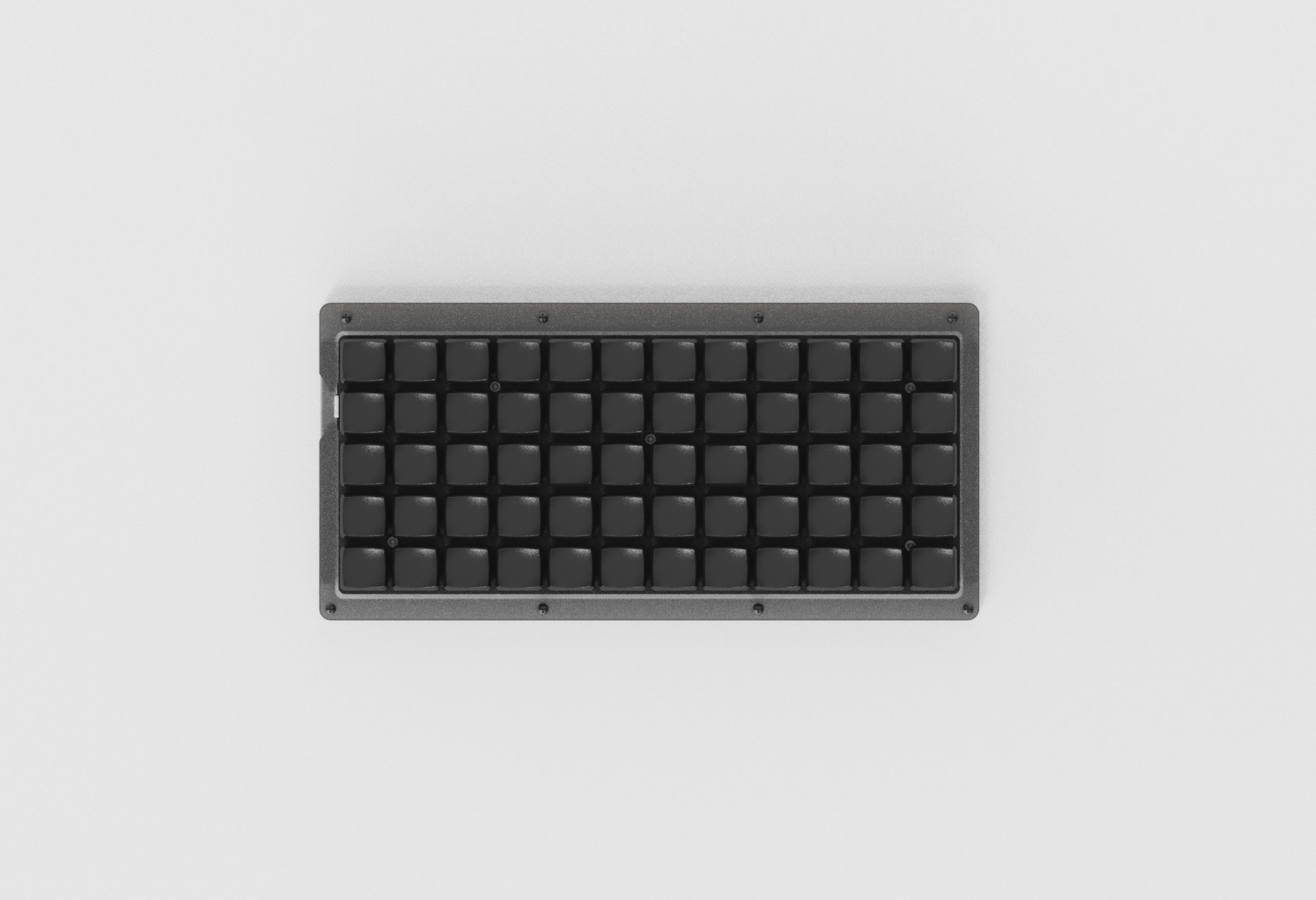
The final case was assembled with easily accessible zinc-plated black M2 screws, standoffs and Poron gasket strips that intended to function as keyboard feet.
Evaluation
Needless to say the smoothness of Poron's friction is far from perfect, and the screw-fastened layers can occasionally suffer from uneven tension.
Ultimately, a project like this provided invaluable firsthand knowledge of the material properties, the manufacturing process and its limitations.